
{主关键词}
银翼杀手
Can US afford cost of clean-energy protectionism in race for AI capabilities?_我的网站

一 |
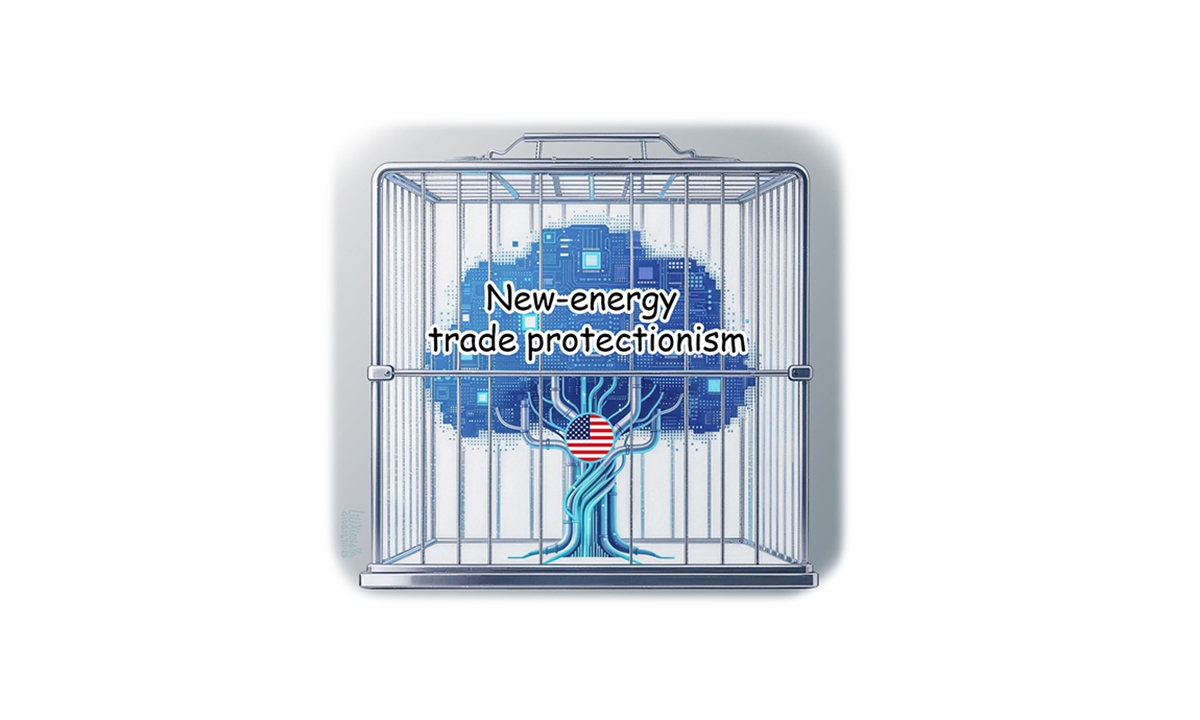
Recent media reports have questioned whether a natural gas plant built to power an Amazon data center project in Texas could become the largest climate polluter in the US. The controversy, whatever the eventual outcome, offers a reality check for America's artificial intelligence (AI) drive.
It exposes a growing contradiction: The US is racing to expand its AI capabilities, yet its protectionist trade policies are making it harder and more costly to access some of the clean-energy technologies needed to sustain that expansion. This raises a broader question: Can an energy-intensive AI race afford the costs of renewable energy protectionism?
The US is entering a new era of rising electricity demand. Data centers, the backbone of the AI economy, are emerging as one of the fastest-growing sources of power consumption. Much of that demand is still being met by fossil fuels: The International Energy Agency reports that natural gas supplies more than 40 percent of the electricity used by data centers in the US, making it their largest source of power.
So, it's not surprising that the expansion of data centers has raised concerns over their environmental impact and the pressure they could place on local power systems and electricity bills. A Gallup survey conducted in March found that seven in 10 Americans opposed the construction of AI data centers in their local area, including 48 percent who strongly opposed such projects.
The findings point to a broader challenge for the US: The race to develop AI is increasingly becoming a race to meet growing energy needs. Addressing this challenge will require more than advances in computing technology; it will also depend on an energy system capable of delivering large amounts of reliable, affordable and cleaner power. That, in turn, will require faster development and broader deployment of clean-energy technologies, from solar power to energy storage.
Yet in the clean-energy sector, the US has increasingly relied on protectionist trade measures that limit access to cost-competitive products from global markets. The country has placed greater emphasis on expanding domestic manufacturing capacity, but rebuilding entire clean-energy supply chains at home is a costly and time-consuming process. Even if expanded domestic production is achieved, it is likely to come at a higher cost, making the deployment of renewable technologies more expensive and potentially slower.
The solar industry offers a clear illustration of this policy direction. The US has continued to expand trade barriers in the sector. Reuters reported that the US government announced on Thursday a series of price floors and a 15 percent tariff on products made from polysilicon, a raw material used in solar panels.
The challenge lies in the limited scale of the US polysilicon industry. Reuters reported that the country has two polysilicon factories. Against this backdrop, relying on domestic polysilicon production while restricting access to imports runs counter to the goal of expanding solar power in the US. The country risks creating barriers that ultimately constrain its own access to the global supply chains needed for growth.
The pressing issue for the US is the speed at which new power demand is emerging. The expansion of data centers is creating electricity needs that cannot wait for domestic clean-energy capacity to develop gradually. Global supply chains can provide the scale and speed required in the near term. By narrowing access to these sources, the US risks turning clean-energy policy into a drag on the infrastructure needed for its AI race.
The US has placed AI high on its economic and technological agenda. The outcome of this race will matter greatly, as financial markets are also watching whether America can turn its AI efforts into commercial success.
This leaves the US with a difficult choice: Can it afford the cost of clean-energy protectionism while racing to build AI infrastructure? The answer may be no. Trade barriers that limit access to competitive renewable technologies could ultimately become a constraint on the AI expansion that Washington is seeking to accelerate.
The author is a reporter with the Global Times. [email protected]
。 秋季学期开学临近,关于义务教育均衡编班的话题和新闻引发社会的关注。均衡编班也叫平行分班、阳光分班,是指在小学和初中起始年级全面实施免试就近入学,不依据学生成绩、特长等设立或变相设立重点班、实验班、快慢班。按照教育部的要求,从今年开始,全面推进义务教育均衡编班。在均衡编班方面,走在了全国前列。从2022年起,石家庄等地就通过电脑随机派位方式均衡编班。

二 | 今年,又明确提出,全面实施师资均衡配置、学生随机分班,合理制定方案,实现各班级学生在人数、性别等方面的基本均衡。学校分班方案、过程及结果应向家长公开,主动接受监督,确保程序公开透明。均衡编班是阳光招生的重要一环。2024年以来,教育部连续三年部署开展义务教育阳光招生专项行动,全面规范义务教育招生入学工作。教育公平,起点在于入学机会的公平。如何做好阳光招生,是摆在各级教育行政管理部门和学校面前的一道必答题。做好阳光招生,首先要合理划定招生片区范围。属地教育行政部门要健全常住学龄人口变化监测预警制度,开展各学段入学人数和现有学位摸底,提前做好预判应对。

三 | 科学合理划定学校招生片区,对出现学校布局调整、学龄人口变化较大等情况的,可在科学评估、广泛征求意见的基础上适当调整片区范围,并提前向社会公布。把普通高中纳入阳光招生专项行动,是今年的一大亮点。教育部要求,部属高校附中、省属高中、设区的城市高中,一律不得违规面向县域掐尖招生,切实保障县域普通高中发展空间。为了让不同学校的学生同样拥有升入优质高中的机会,持续放大指标到校政策效能,省级示范性普通高中将不低于80%招生名额分配到区域内初中学校。针对“意向登记”“保底协议”等违规乱象,明令禁止提前签约、收取意向金,杜绝招生与捐资助学、教育赞助相挂钩,守护高中阶段招生的公平秩序。阳光招生,既要管住学校的招生行为,也要兜牢特殊群体的入学保障。专项行动把保障重点群体入学作为八项重点任务之一,要求全面落实“两为主、两纳入、以居住证为主要依据”的随迁子女入学政策。人口集中流入地区要持续加大公办学校学位供给和招生计划,不断提高随迁子女在公办学校就读比例。做好特殊群体入学保障,各地教育行政部门坚持应入尽入原则,通过普通学校随班就读、特教学校就读、送教上门等方式,妥善、适宜安置适龄残疾儿童少年接受义务教育。面对多子女家庭现实诉求,各地因地制宜落实“长幼随学”实施办法,在学位允许前提下,方便多孩家庭子女同校就读,体现政策温度。

四 | 做好阳光招生,还要简化手续,做好“教育入学一件事”。

五 | 要加快推进户籍、房产、居住证、社保、学籍等入学相关信息的互通共享,制订“教育入学一件事”办事指引清单,线上业务办理实现报名、审核、录取等“一网通办”。阳光招生,是一场制度性重构。从“掐尖”被禁止,到分班被规范,再到指标到校被落实,阳光招生正在从政策要求变成实实在在的民生红利。(王敬照)。
Current article:http://p402j.jiubengtaibingpengou.pics/av010s/20260826/3000284.html
Published on:06:00:36
- 5209“海豚”少年 碧池逐浪
- 98069刚刚|警方通报!不存在网传情况!
- 3583市政府党组召开扩大会议 学习贯彻习近平总书记重要讲话精神
- 40012高键会见淮安市党政代表团
- 8746952知名婴儿用品品牌贝亲 奶瓶消毒器存在安全隐患被召回
- 468快评|为“一老一小”供给更多体育消费新场景
- 81009明年脑机接口未来产业营收将超50亿元 推进脑机接口产学研联动 浙江出台新措施
- 54803被追尾后SU7自动打120电话:车主获救被小米售后团队感动 雷军回应
- 3230以不变应万变?实测沃尔沃XC90
- 2575-year-old giant panda Bao Li celebrates birthday in the U.S.
- 4132漫威《复仇者联盟4》重映版片长185分钟:仅比原版多4分钟 距首映已过去七年
- 383颜宁论文被秒拒背后
- 352华为巴士海南卡正式推出:部分巴士8.5%折扣
- 2171When steel forests glow: How China’s heavy infrastructure found new audiences
- 1172835【吉田響独占インタビュー2】豪快な激走のち救護室直行も回復で丼飯を豪快に食らう
- 3804935开学倒计时,孩子还在昼夜颠倒,怎么办?改变作息规律,听听专家支招
- 568910三星S10系列入门旗舰品牌曝光:Galaxy S10 E
- 77661银行股“新高秀”开启!又有两家股价刷新纪录 相关ETF份额分化
- 537小花钱包还款期收会员权益费要求登记反馈退款
- 356今天首发!河北好物坐上专列,24小时直通福建
- 2856蓝思科技:具身智能板块预计下半年会实现更大幅度增长
- 2802736国台办:民进党当局应尽快取消限制 不要阻挡两岸影视文化交流合作
我的网站热门国内
- Copyright @ 2016-2017 我的网站 版权所有